Children face stress, anxiety and anger just as adults do. School pressure, friendships and the ordinary business of growing up can stir up feelings that are hard to handle. Yoga gives children a healthy way through, combining movement, breathing and mindfulness so they can calm their minds, let go of tension and find some balance.
This post looks at how yoga supports children’s emotional wellbeing, with some simple practices to try at home.
Emotional wellbeing in children
Children feel the full range of emotions, but they often lack the words and the coping skills to express or manage them. Without a healthy outlet, stress and worry build up and show as behaviour, poor sleep or even tummy aches and headaches.
Yoga teaches children to connect with their bodies and minds, and gives them a safe space to notice feelings without judgement. Through mindful movement, breath and relaxation they learn to let difficult emotions pass and find their calm.
How yoga helps
- Stress. Slow breathing and gentle movement switch on the body’s rest response and bring stress hormones down. A few minutes in child’s pose can turn a bad moment around.
- Anxiety. Worry comes from racing thoughts about what might happen. Balancing poses such as tree demand attention, which brings the mind back to right now.
- Anger. Anger is natural but hard for children to control. Poses like warrior two channel that energy and strength, while breathing exercises help them cool down.
- Awareness. Yoga helps children notice feelings early, recognise where they sit in the body, and use what they have learned to settle them.
Five practices to try
1. Child’s pose
Grounding and comforting. Start on hands and knees, sit back on the heels, stretch the arms forward and rest the forehead down. Breathe slowly and imagine being a tortoise tucked into its shell.
2. Belly breathing
Lie on the back with a small soft toy on the tummy. Breathe in through the nose and watch the toy rise, breathe out and watch it fall. Repeat for several breaths. This slows the breath and settles the nervous system.
3. Warrior two
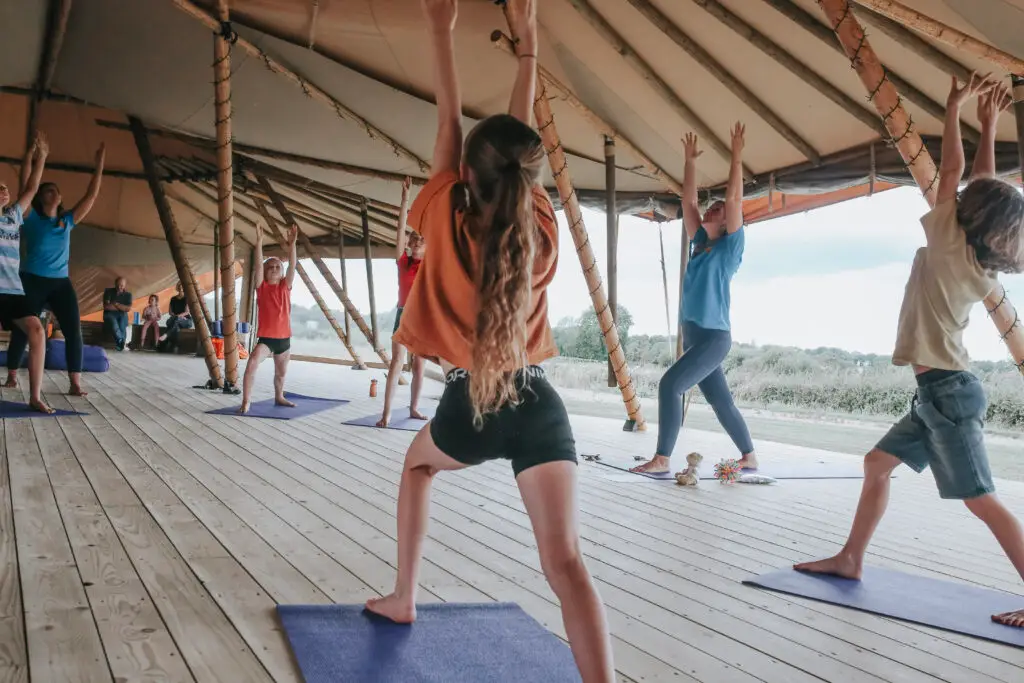
Feet wide, one foot turned out and that knee bent, arms stretched wide and eyes on the front hand. Hold for a few breaths and swap sides. It helps children feel strong and gives frustration somewhere to go.
4. Lion’s breath
Kneel with hands on thighs, breathe in deeply, then open the mouth wide, stick out the tongue and roar as the breath goes out. Repeat a few times. Silly, loud and brilliant for releasing anger.
5. Legs up the wall
Lie on the floor with legs resting up the wall, close the eyes and breathe slowly. A calming reset after a long day.
Making it stick
- Little and often. A few minutes a day builds emotional resilience.
- Use it in the moment. When a child is upset or angry, guide them through one pose or one breathing exercise.
- A calm corner. A quiet, cosy spot where they can practise makes it feel safe.
- Do it together. Children copy what they see, and shared practice is a lovely way to connect.
Yoga will not stop children having big feelings, and it is not meant to. What it gives them is a set of tools they can reach for, at five or at fifteen, whenever those feelings arrive.