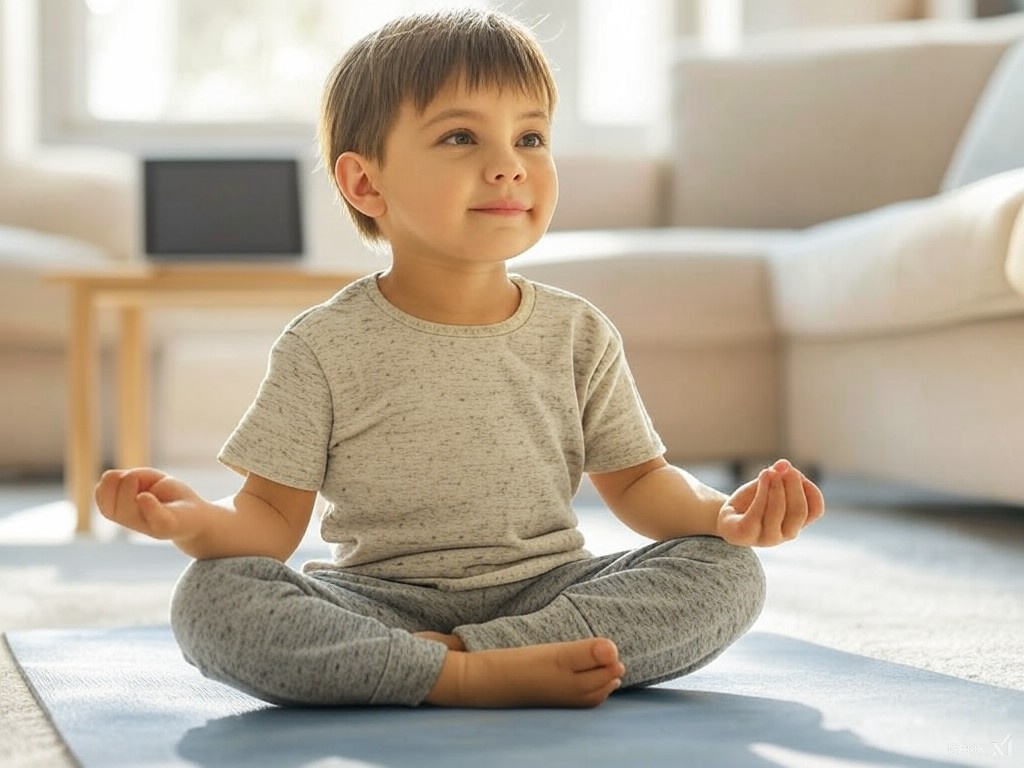
Children spend more time in front of screens than ever, for school, games and entertainment. Screens have their place, but too much of them brings slumped posture, tired eyes, restless attention and far less moving about. Yoga is a simple, playful way to balance the two.
Below is a look at what heavy screen time does, how yoga helps, and a handful of poses you can build into an ordinary day.
What too much screen time does
- Tired eyes and headaches. Long stretches staring at a screen strain the eyes and leave children flat.
- A shorter attention span. Fast moving content makes it harder to settle into slower, real world activities.
- More stress and worse sleep. Gaming and social media in particular are linked with anxiety and trouble dropping off.
- Less movement. Screen time tends to replace the running, climbing and playing that children need.
How yoga helps
- Posture and flexibility. Yoga strengthens the core and undoes the slouch.
- Eye strain. Breathing and relaxation ease the tension that builds up around the eyes and shoulders.
- Focus. Yoga teaches children to notice what they are doing right now.
- Calm. Simple poses and slow breathing switch on the body’s rest response and lift the mood.
- Movement. It is an enjoyable way to build strength, balance and coordination.
Five poses to try after screen time
1. Cat and cow
Loosens a stiff spine. On hands and knees, breathe in and lift the head and chest, breathe out and round the back, tucking the chin. Repeat five to ten times.
2. Downward dog
A full body stretch after a long sit. From hands and knees, tuck the toes and lift the hips so the body makes an upside down V. Hold for five to ten breaths.
3. Seated forward fold
Calms the mind and eases the back. Sit with legs out, reach gently towards the toes and relax into the stretch.
4. Tree
Builds balance and focus. Stand on one leg with the other foot on the ankle or thigh (never the knee), hands together or overhead. Hold, then swap sides.
5. Child’s pose
The perfect wind down. Kneel, sit back on the heels, stretch the arms forward and rest the forehead on the mat with slow, deep breaths.
Making yoga time happen
- A yoga break habit. Five minutes of yoga after every half hour or so on a screen.
- Make it a game. Be a different animal in every pose, or tell a story through them.
- Join in. Children copy their parents, so do it together.
- A cosy corner. A mat or rug in a quiet spot makes it feel like a proper activity.
- A yoga goal, not a screen limit. Aim for a few minutes of yoga a day rather than policing the tablet.
Screens are part of modern life and they do not have to run the day. A few poses and some slow breathing give children healthier habits and a bit of balance. Try a yoga break this week and see how much calmer and more settled they are afterwards.